Quick answer
What does endometriosis feel like? Most sources describe pelvic pain: period cramps far worse than usual, pain in the lower tummy and back, and pain during sex or when using the toilet. People in studies use words like cramping, stabbing, throbbing and dragging. It is different for everyone, and some people feel nothing at all.
Most health bodies describe endometriosis as pelvic pain: period cramps that are far worse than usual, pain in the lower tummy and back, and pain during sex or when using the toilet. In studies, people most often reach for words like cramping, stabbing, throbbing and dragging, and no two describe exactly the same thing.
Is this just period pain?
Trying to find the words for your pain?
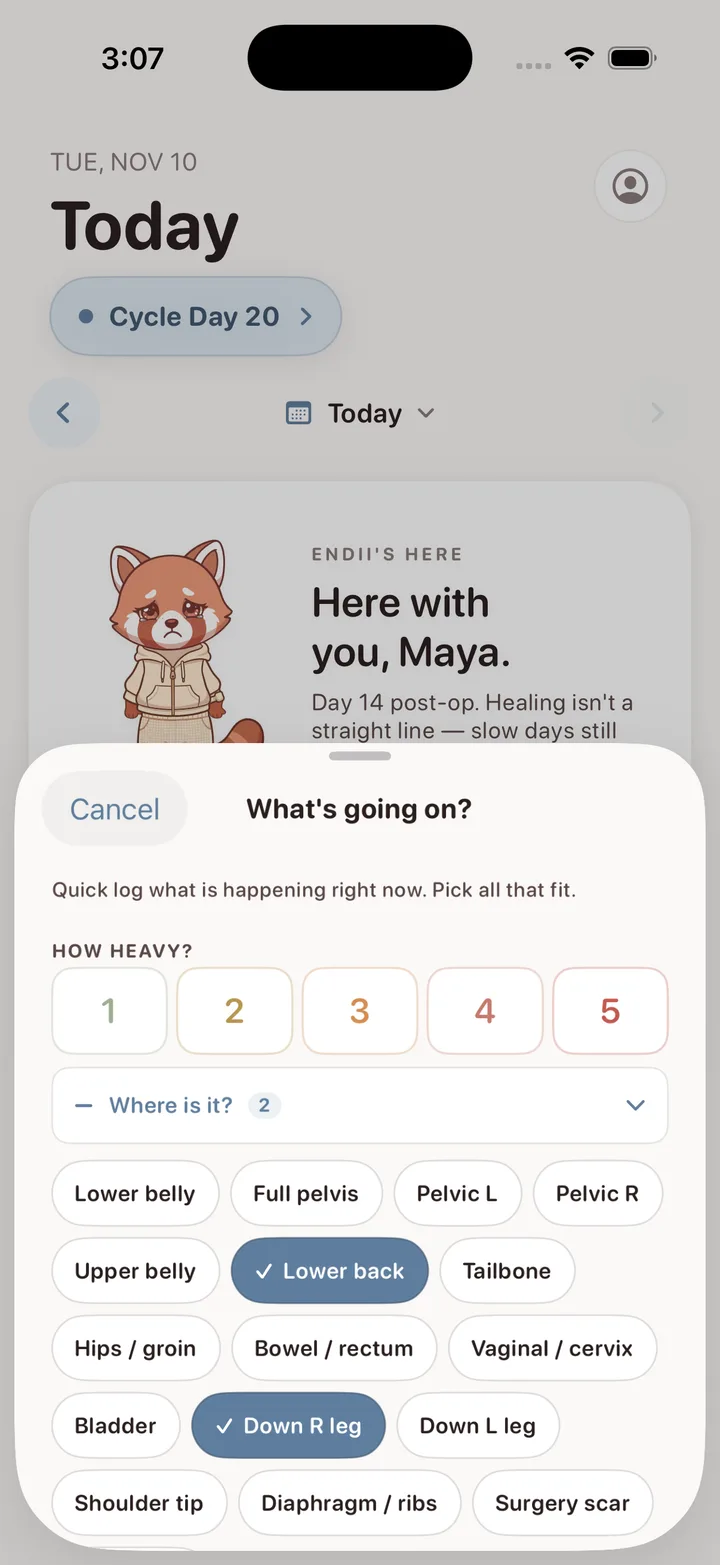
Endii lets you log what it feels like, where it is and how strong it is in a few taps.
The short version
The NHS1 says endometriosis is different for everyone. The Mayo Clinic2 says the main symptom is pelvic pain, often linked with periods, and that people with endometriosis often describe menstrual pain that is far worse than usual. The Cleveland Clinic3 adds that the pain can be intense or mild.
The US Office on Women's Health4 puts it this way: women with endometriosis may have many different kinds of pain. That is why one short answer never quite fits, and why the rest of this page is organised by what the pain is like, where it is and when it comes.
The words people use for the pain
Two studies asked women directly.
In a 2010 study in Fertility and Sterility5, 185 women who were about to have keyhole surgery for long-term pelvic pain filled in a questionnaire about their pain first. Surgery confirmed endometriosis in 113 of them. Three descriptions were reported more often by the women who turned out to have endometriosis: throbbing pain, gnawing pain, and a dragging pain going to the legs. Women with deep endometriosis were more likely to report shooting pain in the rectum and a sense of their insides being pulled down.
In a 2021 interview study in the British Journal of Pain6, 20 women in the UK with confirmed endometriosis described their pain in their own words. Some described period pain as an ache or a cramp, others as a stabbing pain. Pain when urinating was often described as burning. The researchers concluded that no two women appeared to have the same pain experience.
Health bodies use similar language:
- Cramping. The NICHD7 lists painful or even debilitating menstrual cramps, which may get worse over time.
- Deep. The Office on Women's Health says pain during or after sex is usually described as a deep pain, different from pain felt at the entrance to the vagina.
- Throbbing or stabbing. The Endometriosis Foundation of America8 says that when nerves are involved, patients often describe a throbbing or stabbing sensation that gets worse with physical activity, even walking.
- Starting like a normal cramp, then escalating. The Endometriosis Foundation of America's page on painful periods9 says these cramps may start out feeling like normal menstrual cramps before the pain escalates suddenly.
Where it is felt
The RCOG10 says symptoms depend on where the endometriosis is. The places sources mention most:
- Lower tummy and pelvis. Listed by the NHS, the Mayo Clinic and the Cleveland Clinic.
- Lower back. The NHS lists pain in the lower tummy and back. The Office on Women's Health lists chronic pain in the lower back and pelvis.
- Deep in the pelvis, during or after sex. The NHS lists pain during or after sex. The Office on Women's Health says it is usually described as deep.
- Bowel and bladder. The NHS lists pain when you poo or pee. The Mayo Clinic says this is most likely before or during a period.
- Hips, buttocks and legs. The Endometriosis Foundation of America describes lower back pain that runs down one or both legs, and hip pain that reaches the buttock.
- Chest. Endometriosis UK11 lists chest pain during a period and says endometriosis in the chest is rare.
One caution from the 2010 study: the area where women felt pain was unrelated to the area where endometriosis was found. Where it hurts is worth recording, but it is not a map of where the endometriosis is.
Where can it hurt?
When it comes
Timing is the part that sources describe most consistently, and it is the easiest part to record.
- Before a period. The Mayo Clinic says pelvic pain and cramping may start before a period and last for days into it.
- During a period. The Cleveland Clinic says symptoms often feel worse just before and during a period.
- After a period. ACOG12 says period pain caused by a condition such as endometriosis may get worse as the period continues and may not go away after it ends.
- Mid-cycle. The Endometriosis Foundation of America says the cramps can also occur during ovulation.
- Any time. The NHS lists pain in the lower tummy and back, pain during or after sex and pain when using the toilet as symptoms you can have at any time.
The 2021 interview study found four patterns among the women it spoke to: pain that followed the cycle, pain that was constant, pain that seemed random, and pain that changed over time.
When can it hurt?
How it differs from ordinary period pain
Period pain is common. Endometriosis UK says about three out of four people who have periods experience it, and that mild pain which can be managed with over-the-counter painkillers is normally experienced with periods.
The NHS page on period pain13 describes ordinary period pain as painful cramps in the tummy that can spread to the back and thighs, felt as a sharp pain or a dull ache, usually lasting up to 3 days.
ACOG describes a second kind of period pain, caused by a condition such as endometriosis. It tends to get worse over time and often lasts longer than normal cramps. The feeling itself can be similar. What sources say differs is how long it lasts, how it changes over the years, and how much it stops you doing.
Endometriosis UK suggests talking to a doctor about period pain that prevents normal daily activities, or pain that continues after or in between periods. The NHS says to ask for an urgent GP appointment or get help from NHS 111 if pelvic pain or period pain is severe or worse than usual and painkillers have not helped.
Hard to put the pain into words? Log what it feels like in Endii as it happens, with the date and cycle day. Free for 14 days, then a subscription.
Get EndiiWhy the amount of pain says little about the amount of endometriosis
The Mayo Clinic says you could have a small amount of tissue with bad pain, or a lot of tissue with little or no pain. ACOG14 says the amount of pain does not always match the severity of the condition, and that some people have no symptoms. The 2010 study found the same thing in its questionnaire answers: pain intensity was unrelated to what surgeons found.
The NICHD says researchers do not know exactly what causes the pain. The explanations it lists include patches that bleed or become inflamed each month, chemicals released by the tissue that irritate what is nearby, nerves growing inside some patches, and patches pressing on nearby nerves.
Other things that feel similar
Pain like this has other possible causes. ACOG says many endometriosis symptoms are similar to those of irritable bowel syndrome, urinary tract problems and infections. The RCOG mentions irritable bowel syndrome and pelvic inflammatory disease. The NHS says this overlap is one reason diagnosis can take a long time.
Nothing on this page can tell you whether your pain is endometriosis. Only a doctor can work that out, and the NHS suggests giving your GP as much information about your symptoms as you can.
Putting your own pain into words
The 2021 study points to earlier research which found that women with endometriosis often lack the tools to express how severe their pain is, and fall back on overused comparisons. A few plain details, written down on the day, are easier to hand over than a description from memory:
- The word that fits. Cramping, stabbing, throbbing, burning, dragging, aching, or your own.
- Where. Lower tummy, one side, lower back, deep inside, down a leg.
- When. The date and where you are in your cycle.
- How strong. A number you use the same way each time.
- What it stopped you doing. Work, sleep, walking, eating, sex.
- What you tried and whether it helped.
What to jot down when it hurts
Or log it in Endii
 123
How Endii helps
Endii was built by a woman with endometriosis who was tired of needing three apps to manage one condition.
- Pain in your words: log type, location and intensity, with your cycle day saved alongside.
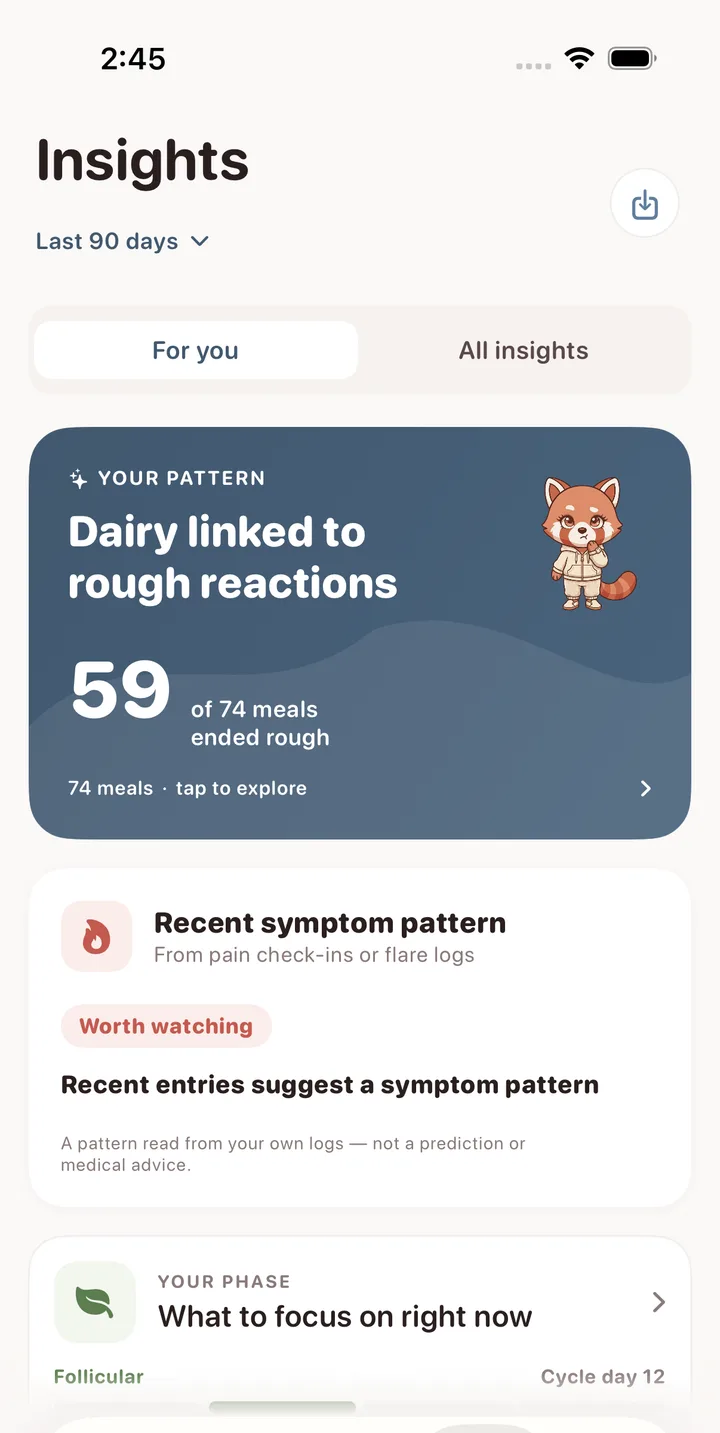
- Patterns: see whether pain clusters around your period, mid-cycle, or neither.
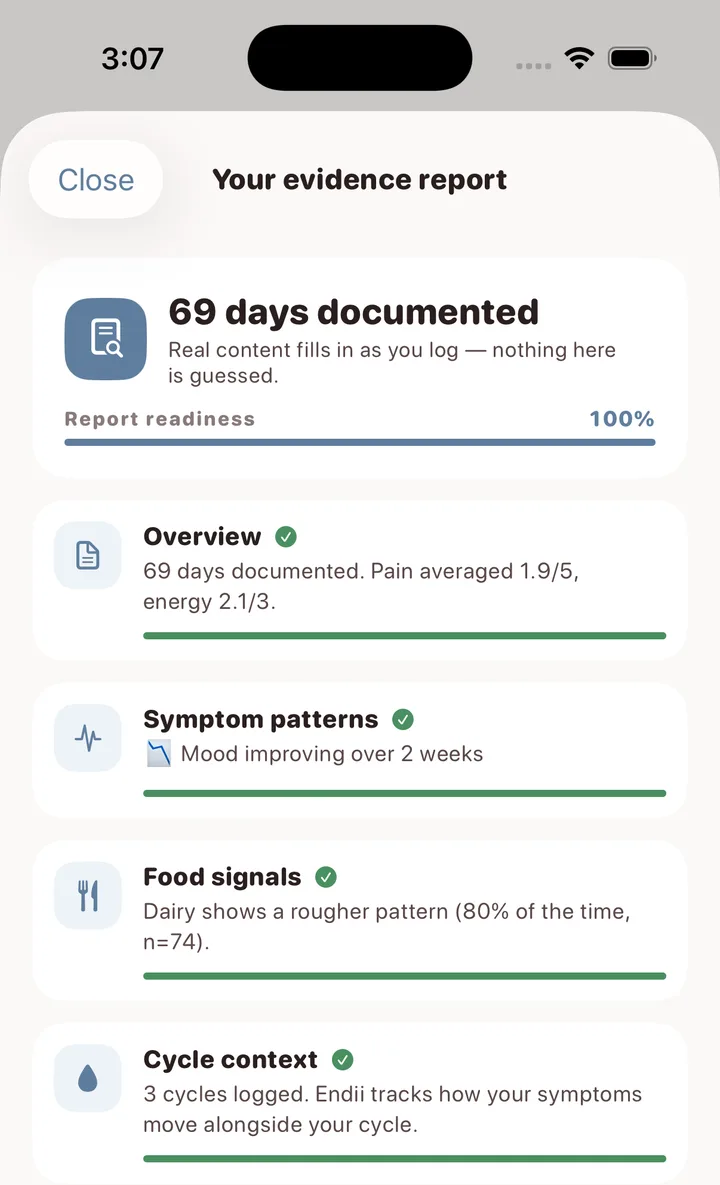
- Doctor report: a clear PDF of your symptoms, patterns and what you have tried.
Bring a clear record to your next appointment.
Endii comes with a 14-day free trial.
Related guides
Sources
- NHS. Endometriosis. nhs.uk
- Mayo Clinic. Endometriosis: symptoms and causes. mayoclinic.org
- Cleveland Clinic. Endometriosis. my.clevelandclinic.org
- US Office on Women's Health. Endometriosis. womenshealth.gov
- Ballard K, Lane H, Hudelist G, Banerjee S, Wright J. Fertility and Sterility, 2010. Can specific pain symptoms help in the diagnosis of endometriosis? A cohort study of women with chronic pelvic pain. pubmed.ncbi.nlm.nih.gov
- Drabble SJ, Long J, Alele B, O'Cathain A. British Journal of Pain, 2021. Constellations of pain: a qualitative study of the complexity of women's endometriosis-related pain. pmc.ncbi.nlm.nih.gov
- US National Institute of Child Health and Human Development (NICHD). What are the symptoms of endometriosis?. nichd.nih.gov
- Endometriosis Foundation of America. Neuropathy. endofound.org
- Endometriosis Foundation of America. Painful periods. endofound.org
- Royal College of Obstetricians and Gynaecologists (RCOG). Endometriosis: patient information. rcog.org.uk
- Endometriosis UK. Endometriosis symptoms. endometriosis-uk.org
- American College of Obstetricians and Gynecologists (ACOG). Dysmenorrhea: painful periods. acog.org
- NHS. Period pain. nhs.uk
- American College of Obstetricians and Gynecologists (ACOG). Endometriosis: frequently asked questions. acog.org
Sources last checked on 12 November 2026. We link to the page each statement comes from so you can read it in full.
Endii is a tracking journal, not medical advice. It does not diagnose or treat any condition. Always talk to a qualified doctor about your symptoms and before making medical decisions. In an emergency, contact emergency services.