Quick answer
What does an endometriosis flare up feel like? People describe a stretch where their usual symptoms get noticeably worse: pelvic pain, pain in the back, hips or legs, bloating, deep tiredness, nausea, and bowel or bladder discomfort. It is different from person to person, and often different from one flare to the next.
If you searched for this in the middle of a flare, I'm sorry. Start with the short version.
"Flare" is not a formal medical term. It is the word people with endometriosis use for a stretch of time when symptoms get noticeably worse than their everyday baseline. There is no single definition, which is part of why flares are so hard to explain to someone who has not had one.
This page covers what people describe, how long flares tend to last, what seems to set them off, and what is worth writing down.
Log a flare in a few taps.
Endii keeps the when, where and how bad, so you do not have to remember it later.
What a flare can feel like
Flares look different from person to person. These are the things people describe most often:
- Pelvic pain that is sharper, heavier or more constant than usual
- Pain that spreads to the lower back, hips or legs
- Bloating, sometimes called endo belly
- Deep tiredness that rest does not fix
- Nausea
- Bowel or bladder discomfort
- Brain fog and trouble concentrating
The symptoms themselves are well documented, even though "flare" is not a medical term. The NHS1 lists pain in the lower tummy and back, extreme tiredness, and pain when peeing or pooing. The Mayo Clinic2 lists fatigue, diarrhea, constipation, bloating and nausea, and says these are more common before or during a period.
You might get one of these or most of them. Your flares might also change over time. None of this tells you what is causing your symptoms. Only your doctor can help with that.
How long a flare lasts
There is no standard answer. Some people describe flares that pass in a few hours. Others describe a few days. Some describe longer stretches.
The more useful question is how long your flares last. Most of us guess, and we guess badly, because pain blurs time. If you note when a flare starts and when it eases, after a few of them you will have a real answer to give your doctor.
What sets a flare off
On timing, the sources are consistent. The Cleveland Clinic3 says pain is often worse just before and during a period. The Endometriosis Foundation of America4 says symptoms may come before periods, at ovulation, or all month.
Beyond the cycle, triggers are personal, and there is little research on them. These are the ones people report most:
- The days around a period, or around ovulation
- Stress
- Poor or short sleep
- Certain foods, or alcohol
- Doing too much physically
- Being unwell with something else
Two things to keep in mind. First, something that sets off one person does nothing for another. Second, a pattern in your notes is a clue, not proof. If dairy shows up before a lot of your bad days, that is worth raising with your care team. It does not mean dairy is the cause.
In a flare right now? Log what it feels like in Endii with the date and cycle day, so the pattern is there when you look back. Free for 14 days, then a subscription.
Get EndiiWhat to write down during a flare
You do not need to write an essay while you are curled up on the bathroom floor. A few facts are enough:
- When it started, and when it eased
- Where the pain is
- How bad it is, on whatever scale you will use the same way each time
- Where you are in your cycle, if you have one
- What the day before looked like: food, sleep, stress, activity
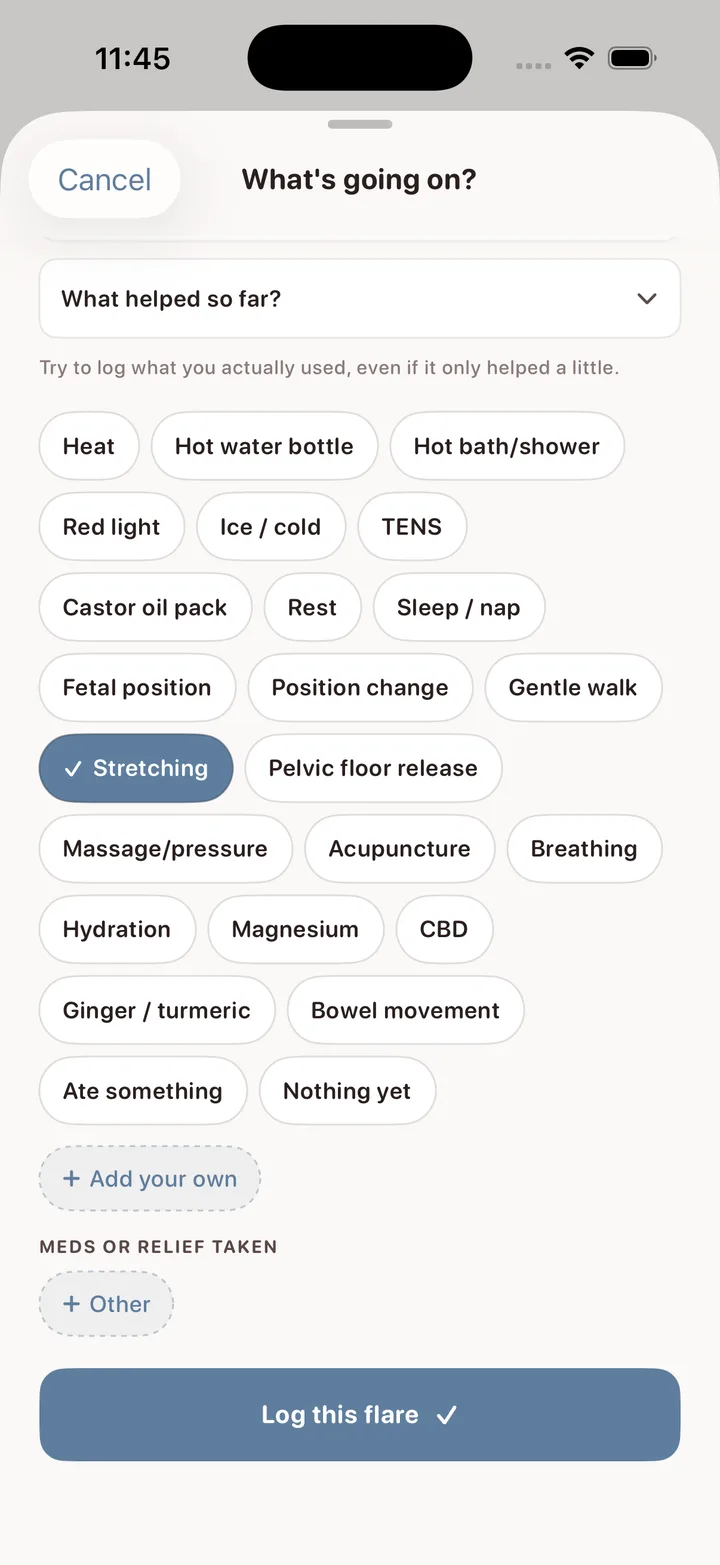
- What you took or did, and whether it helped
Six or eight flares recorded this way will tell you more than months of trying to remember.
When to get medical help
The NHS advises seeing a doctor if your symptoms are affecting your everyday life, or do not improve with treatment.
Contact a doctor or emergency services if your pain is sudden, severe, or different from your usual flares, or if you have a fever, fainting, heavy bleeding, or vomiting that will not stop. Do not wait it out because you have been told before that it is "just your period".
How Endii helps with flares
I built Endii because I have endometriosis and was tired of needing three apps to keep track of one condition.
- Log a flare from the home screen: severity, location and what was going on around it.
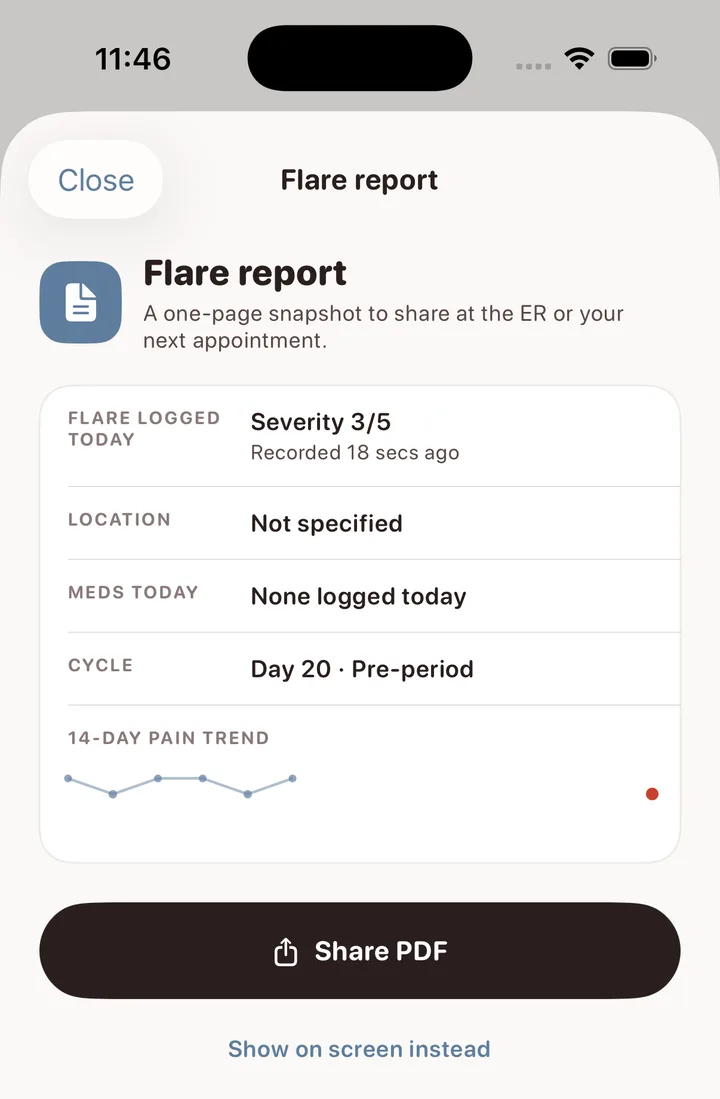
- Flare report: one tap makes a one-page summary an ER doctor can scan, or you can show it on your screen.
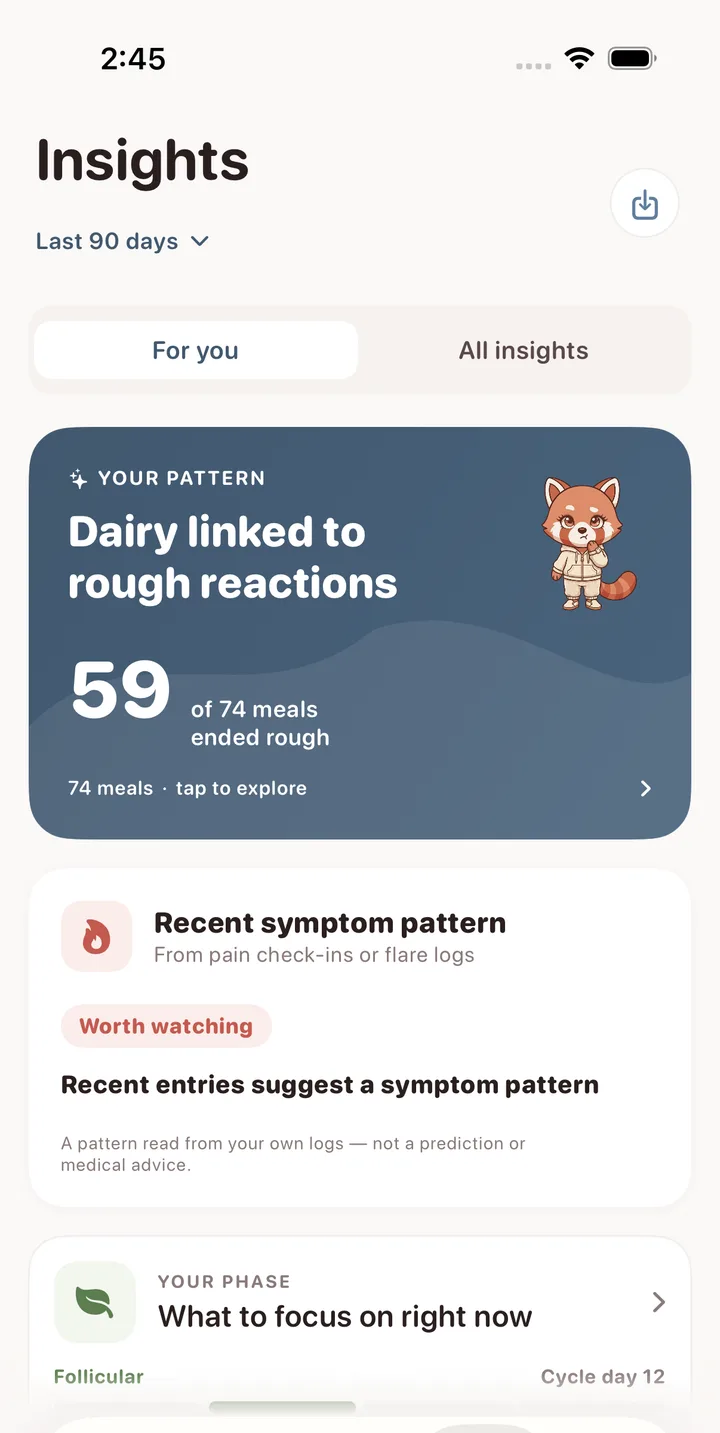
- Patterns: Endii looks across your logs for things that tend to show up around your flares, such as foods, stress, sleep and cycle days. It shows you the numbers so you can review them with your care team.
Start tracking your flares today.
Endii comes with a 14-day free trial.
Related guides
Sources
- NHS. Endometriosis. nhs.uk
- Mayo Clinic. Endometriosis: symptoms and causes. mayoclinic.org
- Cleveland Clinic. Endometriosis. my.clevelandclinic.org
- Endometriosis Foundation of America. Painful periods. endofound.org
Sources last checked on 10 November 2026. We link to the page each statement comes from so you can read it in full.
Endii is a tracking journal, not medical advice. It does not diagnose or treat any condition. Always talk to a qualified doctor about your symptoms and before making medical decisions. In an emergency, contact emergency services.