Quick answer
Does endometriosis cause blood clots during your period? Sources differ. The NHS lists endometriosis among conditions that can cause heavy periods, and the Endometriosis Foundation of America says endometriosis cramps often come with heavy, prolonged periods that include clots. Other health bodies do not list endometriosis as a cause of heavy bleeding. The Cleveland Clinic says adenomyosis is more likely than endometriosis to cause heavy bleeding.
Seeing clots in your period can be alarming, especially if you have endometriosis or think you might.
Small clots are common. The useful questions are how big, how often, and how heavy the bleeding is overall. Health bodies have clear answers to those.
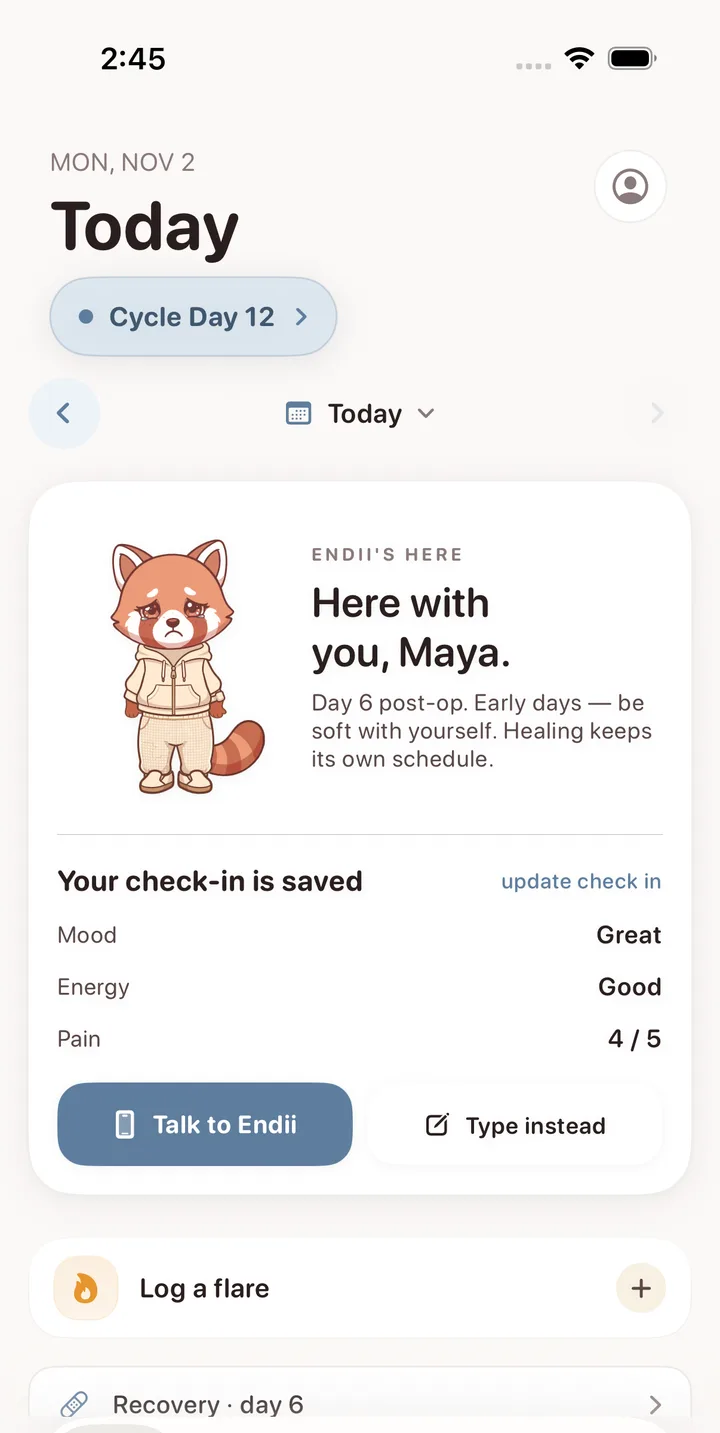
Log your flow and symptoms day by day.
Endii keeps your period, pain and symptoms in one place.
What counts as a large clot
The US Office on Women's Health1 says clots the size of a quarter or smaller are normal, and to call a doctor about larger clots. The CDC2 uses the same quarter size. The NHS3 uses about 2.5 cm, the size of a 10p coin.
Signs of heavy bleeding
| Source | What it lists |
|---|---|
| CDC | Soaking one or more pads or tampons every hour for several hours, clots the size of a quarter or larger, periods longer than 7 days |
| NHS | Changing a pad or tampon every 1 to 2 hours, periods longer than 7 days, clots larger than about 2.5 cm |
| Cleveland Clinic | Quarter-sized or bigger clots more than once or twice. Soaking two or more pads or tampons an hour for 2 to 3 hours needs a provider visit or emergency care |
The Cleveland Clinic figures are from its page on heavy menstrual bleeding4.
Three signs of heavy bleeding the sources agree on
Is it the endometriosis
Sources do not fully agree, and it is worth knowing that.
The NHS lists endometriosis, adenomyosis and fibroids among conditions that can cause heavy periods. The Endometriosis Foundation of America5 says endometriosis cramps are often associated with very heavy, prolonged periods, often including clots. Endometriosis UK6 lists heavy menstrual bleeding as a common symptom.
Other health bodies do not list endometriosis as a cause of heavy bleeding. The Cleveland Clinic7 lists heavy or prolonged bleeding with clotting as a symptom of adenomyosis, a related condition, and says adenomyosis is more likely than endometriosis to cause heavy bleeding.
Heavy bleeding has several possible causes. A doctor is the person to work out which applies to you, and a clear record helps them do it.
Seeing clots? Log clots and heavy days in Endii with the date and cycle day, so it is written down for your appointment. Free for 14 days, then a subscription.
Get EndiiWhat to keep a note of
- How many days you bleed
- How often you change a pad, tampon or cup on your heaviest day
- The size of any clots, compared with a coin
- Your pain level each day
- Dizziness, lightheadedness or unusual tiredness
- Bleeding between periods or after sex
When to get medical advice
Get advice if your bleeding matches any of the signs in the table above. The NHS also advises seeing a doctor if heavy periods are affecting your life, if your pain is severe, or if you bleed between periods or after sex. MedlinePlus8 advises contacting a provider if heavy blood loss causes dizziness or lightheadedness.
If you are soaking through pads or tampons every hour and feel faint, treat it as urgent.
How Endii helps
Endii was built by a woman with endometriosis who was tired of needing three apps to manage one condition.
- Periods, irregular cycles and spotting tracked alongside your symptoms.
- Pain and 35+ endo symptoms, with how bad and when.
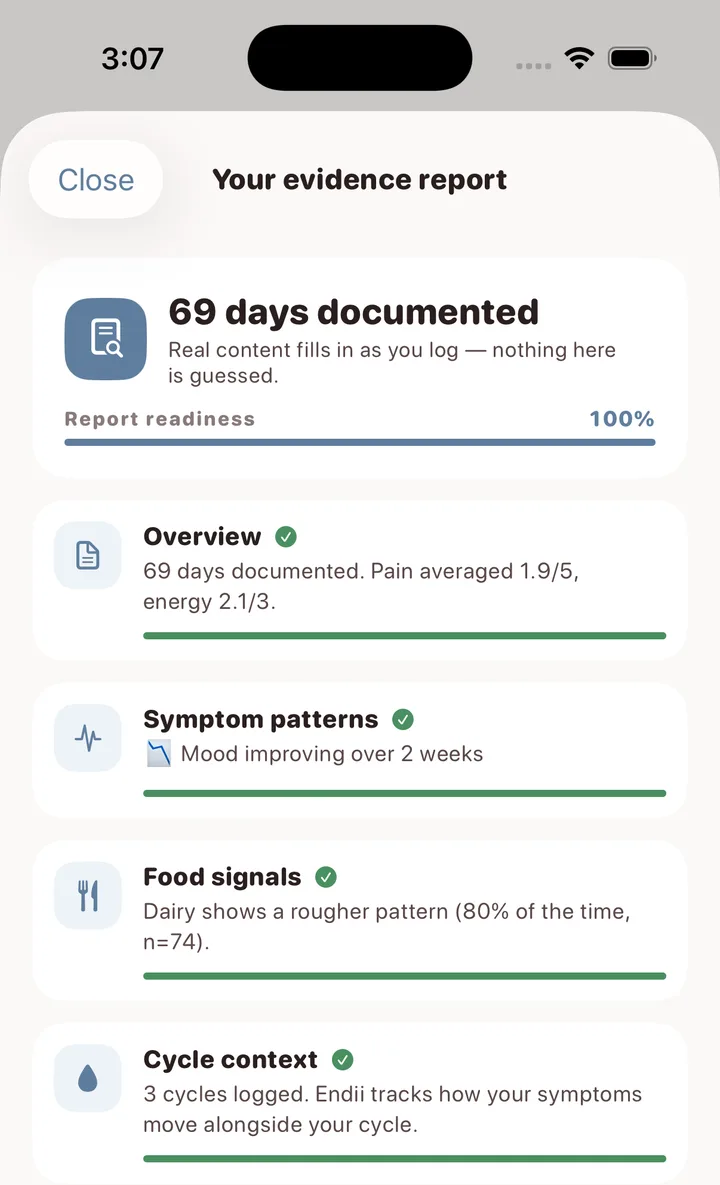
- Doctor report: a clear PDF of your symptoms and patterns, so the appointment starts with facts.
Related guides
Sources
- US Office on Women's Health. Period problems. womenshealth.gov
- US Centers for Disease Control and Prevention (CDC). About heavy menstrual bleeding. cdc.gov
- NHS. Heavy periods. nhs.uk
- Cleveland Clinic. Heavy menstrual bleeding. my.clevelandclinic.org
- Endometriosis Foundation of America. Painful periods. endofound.org
- Endometriosis UK. Endometriosis symptoms. endometriosis-uk.org
- Cleveland Clinic. Adenomyosis. my.clevelandclinic.org
- MedlinePlus, US National Library of Medicine. Endometriosis. medlineplus.gov
Sources last checked on 10 November 2026. We link to the page each statement comes from so you can read it in full.
Endii is a tracking journal, not medical advice. It does not diagnose or treat any condition. Always talk to a qualified doctor about your symptoms and before making medical decisions. In an emergency, contact emergency services.