Quick answer
Is ovulation pain a sign of endometriosis? It can be linked, but it is not proof. Endometriosis UK lists ovulation pain among the symptoms of endometriosis, and the NHS says pain like ovulation pain can be caused by conditions such as endometriosis. Ovulation pain is also common in people without endometriosis. Only a doctor can tell you what is behind yours.
Pain in the middle of your cycle has a name, mittelschmerz, and plenty of people get it without any underlying condition. It is also one of the times of the month when people with endometriosis describe pain.
So the pain alone does not tell you much. The timing, the length and the pattern over several cycles tell you more.
See your pain against your cycle day.
Endii logs symptoms alongside your cycle.
What ordinary ovulation pain is like
The NHS1 says ovulation pain happens about 14 days before your period and lasts from a few minutes to one or two days. MedlinePlus2 describes it as one-sided pain in the lower abdomen around the middle of the cycle, and says about one in five women have it. The Cleveland Clinic3 says it typically lasts a few hours, and up to 48 hours.
How long ordinary ovulation pain lasts, in hours
Where endometriosis comes in
The NHS says pain similar to ovulation pain can be caused by other conditions, including endometriosis, ovarian cysts, some infections, and ectopic pregnancy. Endometriosis UK4 lists ovulation pain among the symptoms of endometriosis. The Endometriosis Foundation of America5 says endometriosis cramps can happen during ovulation, and that symptoms may come before periods, at ovulation, or all month.
None of these sources says how often ovulation pain turns out to be endometriosis. Mid-cycle pain is not a test for it.
What a record shows that memory does not
| What to note | Why it helps | |
|---|---|---|
| Timing | Which cycle day the pain starts | Shows whether it is truly mid-cycle |
| Length | Hours or days | Sources describe ordinary ovulation pain as short |
| Side | Left, right or both | Ordinary ovulation pain is usually one-sided |
| Severity | The same scale each time | Shows whether it is getting worse |
| What else | Bleeding, fever, nausea, bowel changes | These change what a doctor will consider |
Three cycles of this is enough to describe your pattern in one sentence.
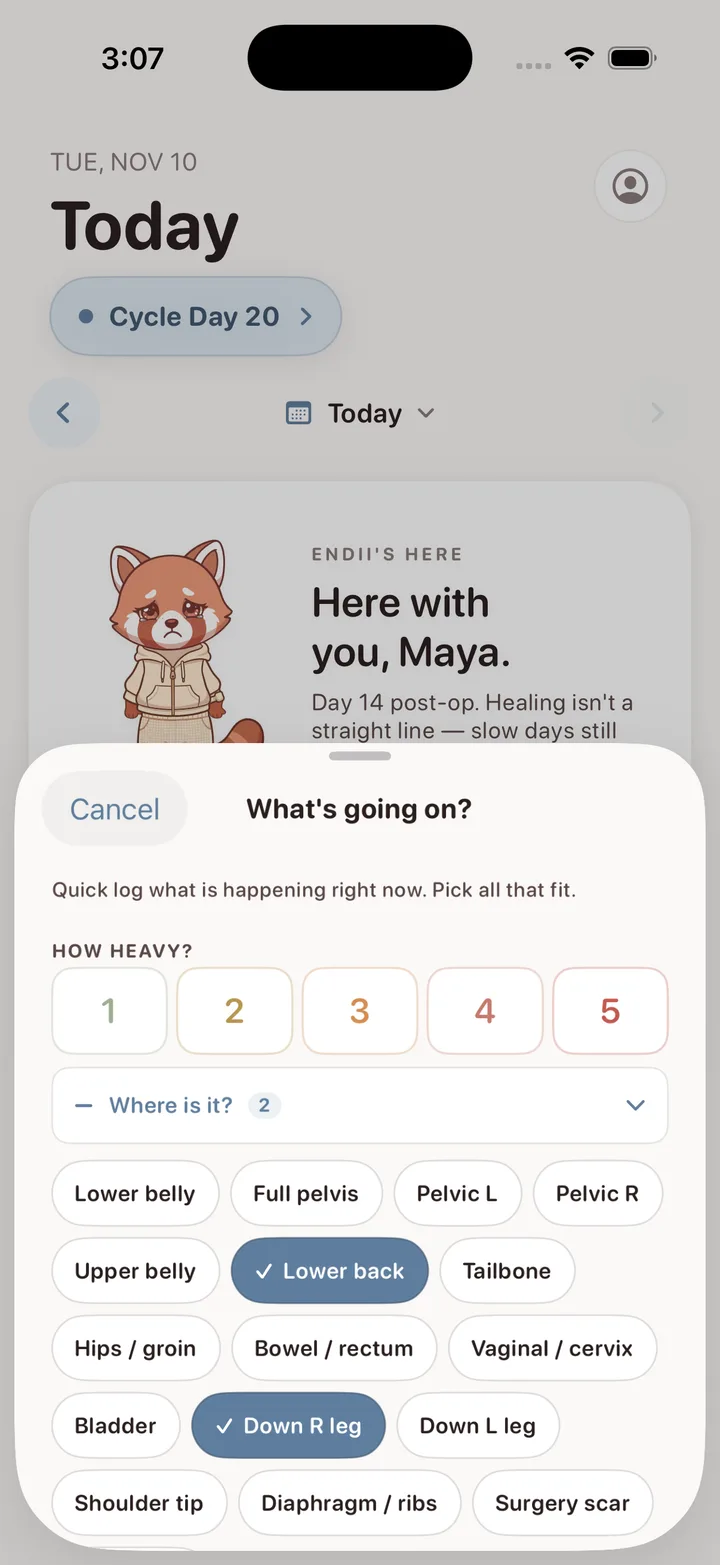
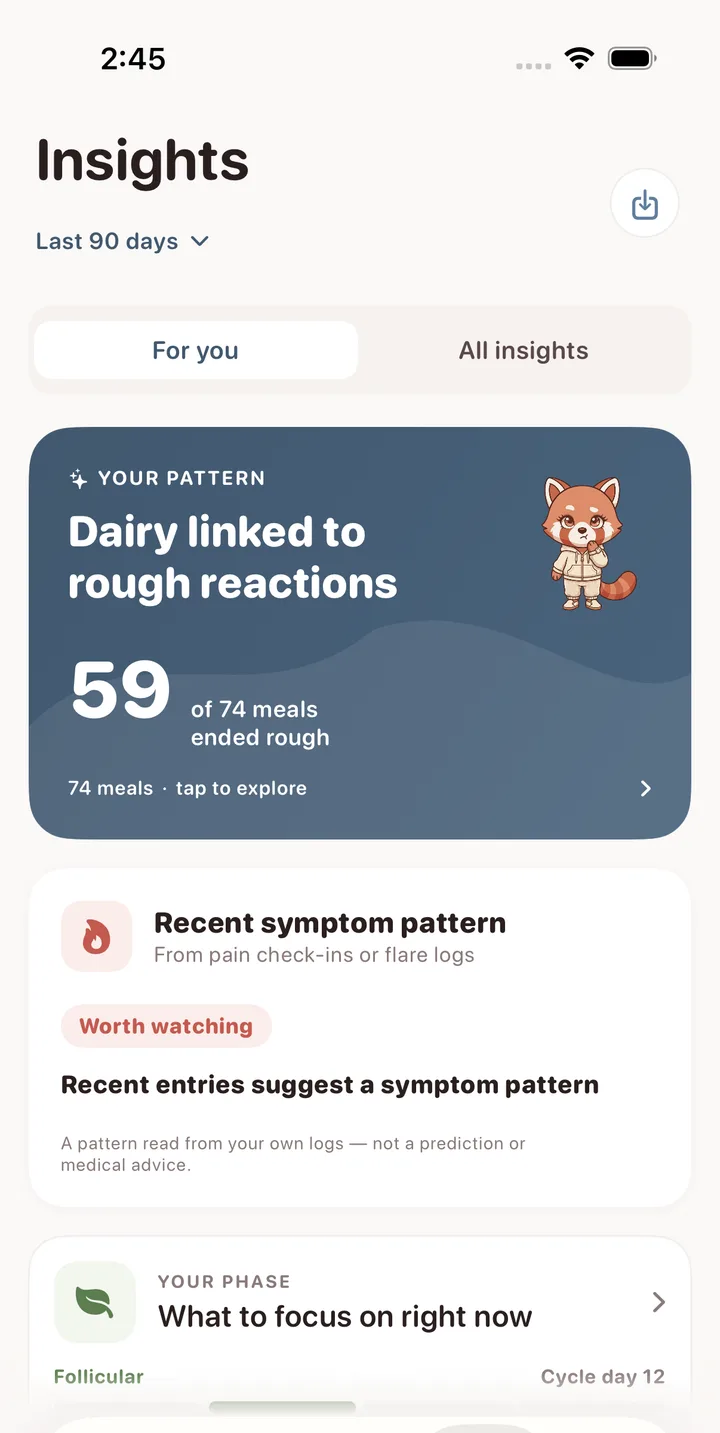
Pain in the middle of your cycle? Log it in Endii with the cycle day, so you can see whether it lines up with ovulation. Free for 14 days, then a subscription.
Get EndiiWhen to get medical advice
The Cleveland Clinic advises calling a provider for severe mid-cycle pain that lasts more than a day or happens most months, or that comes with a fever above 100.4°F. MedlinePlus says to contact a provider if the pain changes, lasts longer than usual, or comes with vaginal bleeding. The NHS advises getting medical advice for tummy pain that painkillers do not help, or that keeps coming back.
Sudden, severe one-sided pain needs urgent care, especially if you could be pregnant.
How Endii helps
Endii was built by a woman with endometriosis who was tired of needing three apps to manage one condition.
- Cycle and symptoms together, so every pain entry has a cycle day attached.
- Pain by type, location and intensity, including left and right pelvis.
- Patterns: Endii looks across your logs for what tends to line up, and shows you the numbers.
- Doctor report: a clear PDF to bring to your appointment.
Find out what your mid-cycle pain is doing.
Endii comes with a 14-day free trial.
Related guides
Sources
- NHS. Ovulation pain. nhs.uk
- MedlinePlus, US National Library of Medicine. Mittelschmerz. medlineplus.gov
- Cleveland Clinic. Ovulation pain (mittelschmerz). my.clevelandclinic.org
- Endometriosis UK. Endometriosis symptoms. endometriosis-uk.org
- Endometriosis Foundation of America. Painful periods. endofound.org
Sources last checked on 10 November 2026. We link to the page each statement comes from so you can read it in full.
Endii is a tracking journal, not medical advice. It does not diagnose or treat any condition. Always talk to a qualified doctor about your symptoms and before making medical decisions. In an emergency, contact emergency services.