Quick answer
What is deep infiltrating endometriosis? It is endometriosis that grows into the tissue beneath the surface, and can grow into nearby organs such as the bowel or bladder. It is also called deep endometriosis or DIE.
Deep infiltrating endometriosis, often shortened to DIE or deep endometriosis, is endometriosis that grows into the tissue beneath the surface, and can grow into nearby organs.
Record which symptoms show up, and when.
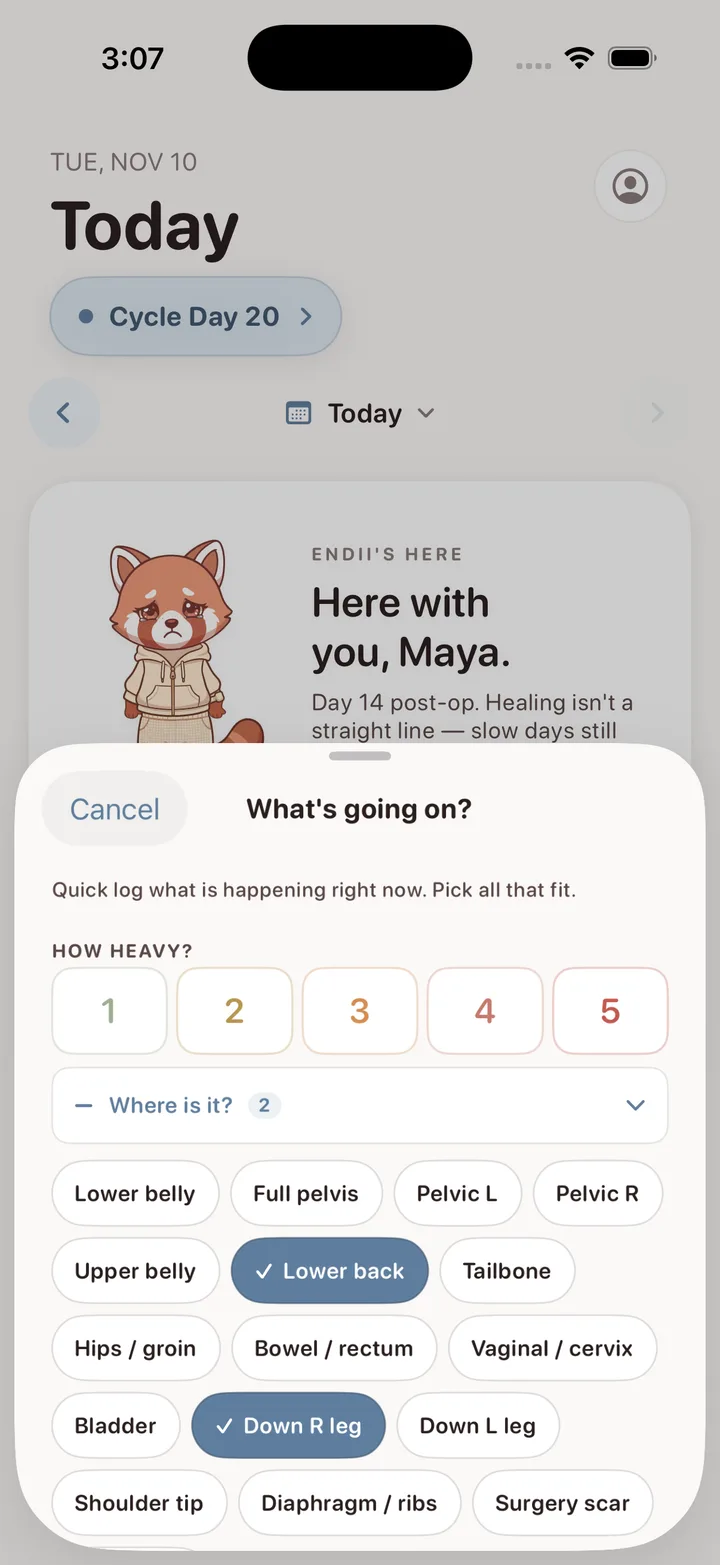
Endii tracks pain by location along with bowel and bladder symptoms.
How it is defined
Radiopaedia1 explains that deep endometriosis was historically defined as reaching 5 mm or more beneath the surface of the peritoneum, the lining of the abdomen and pelvis. Because depth is hard to measure, it is now described as tissue, usually in nodules, that can invade nearby structures and comes with scarring and distorted anatomy.
How it differs from superficial endometriosis
Superficial peritoneal endometriosis sits on the surface of the peritoneum. Radiopaedia describes it as small nodules or plaques, from a few millimetres up to 2 cm.
Where it is found
The Cleveland Clinic2 lists the space behind the uterus, the side walls of the pelvis, the ligaments that support the uterus, the wall of the vagina, the ureters, the bladder, the colon and the rectum.
It says deep endometriosis affects about 1 in 5 women with endometriosis. It also says the condition is sometimes called stage 4, but can occur at other stages.
Pain in more than one place? Log each symptom in Endii with the date and cycle day, so nothing gets left out at your appointment. Free for 14 days, then a subscription.
Get EndiiHow common deep endometriosis is
About 1 in 5 women with endometriosis have deep infiltrating endometriosis.
What scans can and cannot show
The European guideline group ESHRE3 notes that a normal scan does not rule out endometriosis, particularly the superficial kind. A scan result is one piece of information, and your symptoms are another.
What to keep track of
- Pain: where, how bad, and where you are in your cycle
- Pain when opening your bowels or passing urine
- Pain with sex
- Scan and operation reports, with dates
- Treatments tried, and what changed
How Endii helps
Endii was built by a woman with endometriosis who was tired of needing three apps to manage one condition.
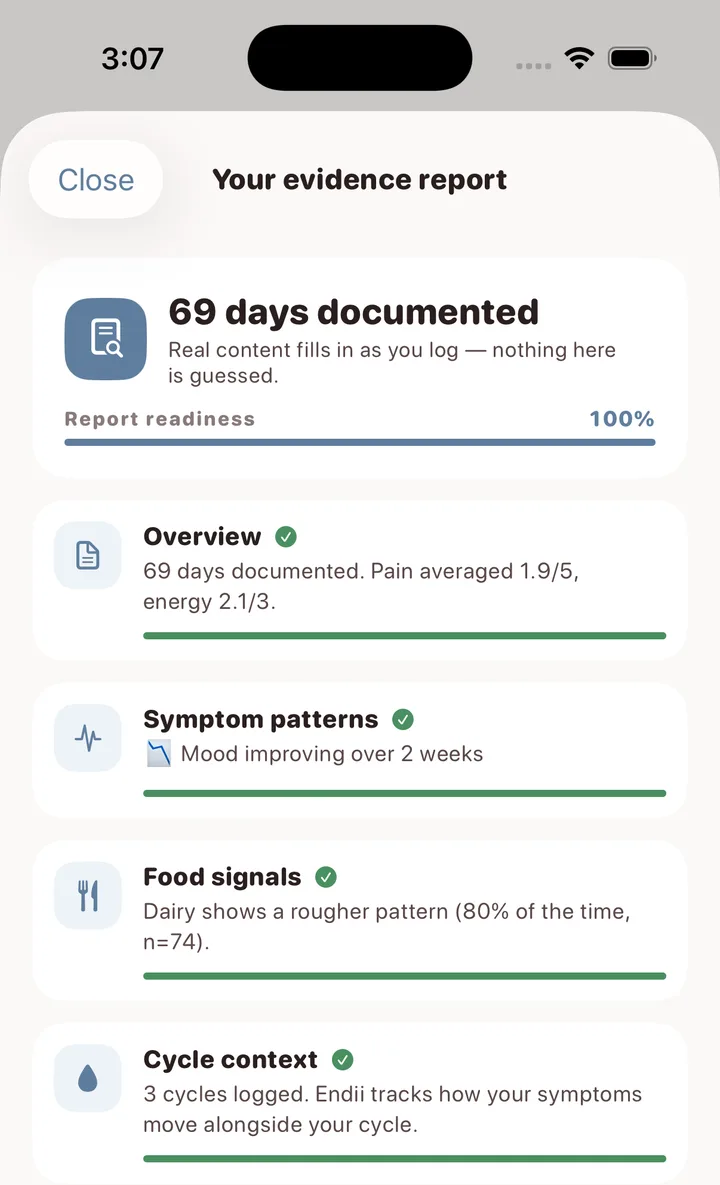
- Symptoms and cycle in one place, with pain by type, location and intensity.
- Records: store scans, letters and operation notes on your phone.
- Doctor report: a clear PDF of your symptoms, patterns and treatments tried.
Bring a clear record to your next appointment.
Endii comes with a 14-day free trial.
Related guides
Sources
- Radiopaedia. Endometriosis. radiopaedia.org
- Cleveland Clinic. Deep infiltrating endometriosis. my.clevelandclinic.org
- Becker CM, Bokor A, Heikinheimo O, and others. Human Reproduction Open, 2022. ESHRE guideline: endometriosis. pmc.ncbi.nlm.nih.gov
Sources last checked on 10 November 2026. We link to the page each statement comes from so you can read it in full.
Endii is a tracking journal, not medical advice. It does not diagnose or treat any condition. Always talk to a qualified doctor about your symptoms and before making medical decisions. In an emergency, contact emergency services.