Quick answer
What is retrograde menstruation? It is when some menstrual blood flows backwards through the fallopian tubes into the pelvis instead of leaving the body.
Retrograde menstruation is when some menstrual blood flows backwards through the fallopian tubes into the pelvis, instead of leaving the body.
Whatever the cause, your pattern is yours.
Endii tracks your symptoms, cycle and treatments in one place.
How common it is
Very. The Cleveland Clinic1 says retrograde menstruation is common, usually causes no problems, and that most people have no symptoms. Radiopaedia2 reports that about 75 to 90 in 100 women have blood in the fluid of the pelvis around the time of their period.
What it has to do with endometriosis
It is the leading theory for how endometriosis begins. The US Office on Women's Health3 calls it the most likely cause.
What it does not explain
Retrograde menstruation happens to most women, and most women do not have endometriosis. So other things must be involved. The Mayo Clinic4 lists other proposed causes, including cells in the pelvis changing type, cells carried in blood or lymph, surgical scars, and the immune system.
Johns Hopkins Medicine5 says doctors do not know exactly what causes endometriosis.
Curious what your own cycle is doing? Log your symptoms in Endii with the date and cycle day. Free for 14 days, then a subscription.
Get EndiiCommon, but only some people develop endometriosis
How it is noticed
It is not something you can feel. The Cleveland Clinic says it is usually noticed during keyhole surgery done for another reason.
What this means for you
Nothing in these sources suggests endometriosis is caused by something you did. The cause is still being researched. What you can do something about is your own record: what your symptoms are, when they happen, and what you have tried.
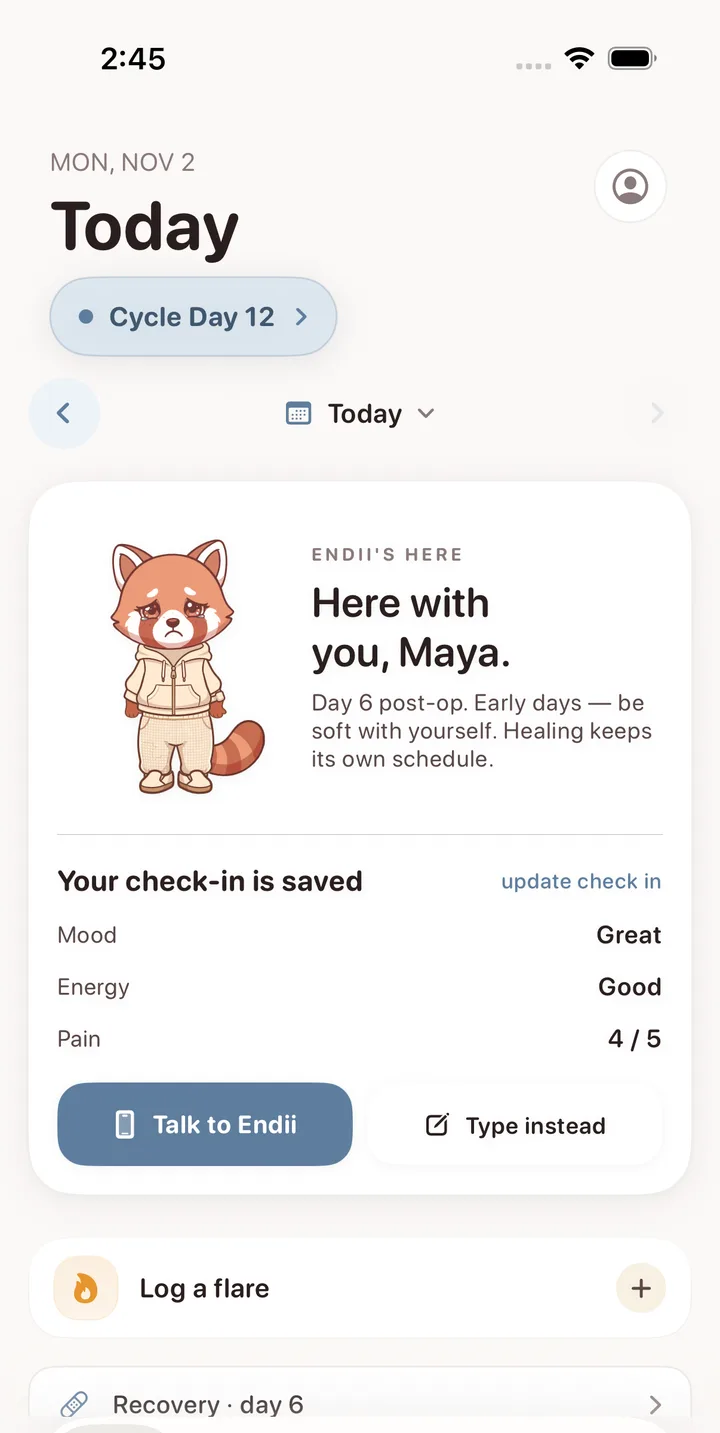
How Endii helps
Endii was built by a woman with endometriosis who was tired of needing three apps to manage one condition.
- Symptoms and cycle in one place, with pain by type, location and intensity.
- Records: store scans, letters and operation notes on your phone.
- Doctor report: a clear PDF of your symptoms, patterns and treatments tried.
Bring a clear record to your next appointment.
Endii comes with a 14-day free trial.
Related guides
Sources
- Cleveland Clinic. Retrograde menstruation. my.clevelandclinic.org
- Radiopaedia. Endometriosis. radiopaedia.org
- US Office on Women's Health. Endometriosis. womenshealth.gov
- Mayo Clinic. Endometriosis: symptoms and causes. mayoclinic.org
- Johns Hopkins Medicine. Endometriosis. hopkinsmedicine.org
- US Office on Women's Health. Endometriosis. womenshealth.gov
Sources last checked on 10 November 2026. We link to the page each statement comes from so you can read it in full.
Endii is a tracking journal, not medical advice. It does not diagnose or treat any condition. Always talk to a qualified doctor about your symptoms and before making medical decisions. In an emergency, contact emergency services.